Skip to content
Spring lawn care is about waking the lawn up. Summer lawn care is about keeping it alive and looking its best through heat, dry stretches, and the steady demand of weekly growth. In Western New York, summer brings warm days, the occasional drought, and the cool-season grasses common across the Tonawanda and Niagara County area working hard to hold their color. Treated right, a Western New York lawn stays green and dense all season. Treated carelessly, it thins, browns, and invites weeds.
This guide covers the summer-specific practices that matter most: how to mow, how to water, how to read drought stress, and what to watch for. Cutting Edge Services maintains lawns across Tonawanda, Niagara County, and Erie County, and owner Steven DiBartolomeo brings over 10 years of industry experience to the seasonal care below.
Mowing: The Single Most Important Summer Habit
Cut high
The most common summer lawn mistake in Western New York is mowing too short. Cool-season grasses like those in our region do best when kept on the taller side through summer, generally around three to three and a half inches. Taller grass shades its own roots, holds soil moisture, and crowds out weeds before they can establish. A lawn scalped short in July bakes, browns, and opens the door to crabgrass.
Follow the one-third rule
Never remove more than one-third of the grass blade in a single mow. Cutting more than that stresses the plant and exposes the lower stem to heat. In peak summer growth, that may mean mowing more often, but each cut stays light. If the lawn has gotten too long, bring it down over two mows a few days apart rather than all at once.
Keep the blade sharp
A dull mower blade tears grass rather than cutting it, leaving a ragged edge that browns and loses moisture. A torn lawn often looks faintly tan across the top a day after mowing. A sharp blade gives a clean cut that heals fast. Sharpen or replace the blade at least once during the season.
Mow at the right time of day
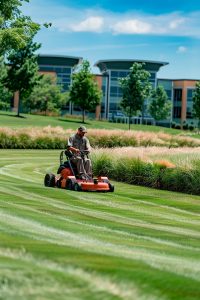
Avoid mowing in the hottest part of the afternoon, when both the grass and the person pushing the mower are under the most stress. Early evening is ideal. And let the clippings fall: short clippings break down quickly and return nitrogen to the soil rather than ending up in a bag.
Watering Through a Western New York Summer
Western New York summers are usually not as dry as other regions, but dry stretches happen, and how you water through them decides whether the lawn coasts or struggles. The principle is simple: water deeply and infrequently. A lawn that gets about one inch of water per week, in one or two long soakings, develops deep roots that find moisture on their own. A lawn watered lightly every day develops shallow roots that depend on you.
Water early in the morning, before the heat. Morning watering lets the blades dry through the day, which discourages fungal disease. Evening watering leaves the lawn damp overnight and invites problems. It also helps to know that a healthy cool-season lawn can go dormant in a true drought, turning tan and pausing growth, then green back up when rain returns. Dormancy is a survival mechanism, not death. If you choose to let a lawn go dormant, the key is consistency: do not water it halfway.
Reading Summer Stress in the Lawn
A summer lawn tells you what it needs if you know the signs. Grass that holds a footprint instead of springing back is short on water. A bluish-gray cast across an area is early drought stress. Irregular brown patches that spread can signal fungal disease, often from overwatering or evening watering. And thinning turf with weeds moving in usually traces back to mowing too short earlier in the season.
Reading these signals early is most of what separates a lawn that coasts through a Western New York summer from one that struggles. The lawn rarely fails overnight. It declines gradually, and a homeowner paying attention has plenty of time to correct course before a small problem becomes a thin, weedy stretch of turf.
Two Things to Watch For in Mid to Late Summer
Grubs
Late summer is when grub damage tends to surface in Western New York lawns. Grubs feed on grass roots, and the first sign is often turf that pulls up easily like loose carpet, or irregular brown patches that do not respond to watering. Skunks or birds digging at the lawn can be another clue. Grub issues are best diagnosed and treated by someone who can confirm what is actually happening before anything is applied.
Weeds
Summer is prime time for crabgrass and broadleaf weeds to exploit any thin or stressed spot. The best weed defense is a thick, tall, healthy lawn that never gives them room to start. Where weeds do take hold, addressing them is far easier earlier than later in the season.
Feeding and Finishing Touches in Summer
A light hand with summer fertilizer
Spring and fall are the main feeding windows for a cool-season Western New York lawn. Summer calls for restraint. A heavy dose of fast-release nitrogen in July pushes tender growth the lawn cannot support in the heat and can burn the turf. If you feed at all in summer, keep it light and slow-release, and never fertilize a lawn that is drought-stressed or dormant. When in doubt, wait for the more forgiving conditions of late summer and fall.
Edging and trimming
Mowing is the foundation, but clean edges along driveways, walks, and beds are what make a lawn look genuinely cared for. String trimming and edging also keep grass from creeping into beds and onto hard surfaces. Done at the same height as the mow, they finish the job without scalping the lawn’s perimeter.
Watch high-traffic and shaded areas
Not every part of the lawn behaves the same in summer. Paths worn by foot traffic compact the soil and thin out, and shaded areas under trees compete with tree roots for water. These spots often need a little extra attention, or a realistic acceptance that they will never quite match the open, sunny turf.
When to Bring in a Professional
Plenty of summer lawn care is satisfying to do yourself. But a few situations are worth a professional eye: a lawn that is browning despite proper watering, spreading patches that might be disease or grubs, or simply a schedule that does not allow for consistent weekly mowing at the right height. Consistent, correct mowing is the foundation of a good summer lawn, and it is the piece homeowners most often let slip during a busy summer.
Cutting Edge Services provides residential lawn maintenance across Tonawanda, Niagara County, and Erie County, including weekly mowing, hedge trimming, mulching, and seasonal landscape care.
Frequently Asked Questions
How short should I cut my lawn in summer in Western New York?
Keep cool-season grass on the taller side through summer, generally around three to three and a half inches. Taller grass shades its roots, holds soil moisture, and crowds out weeds. Cutting too short in summer heat causes browning and invites crabgrass.
How often should I water my lawn in a Western New York summer?
Aim for about one inch of water per week, delivered in one or two deep soakings rather than light daily watering. Deep, infrequent watering builds deep roots. Water early in the morning so the blades dry through the day, which helps prevent fungal disease.
Why is my lawn turning brown even though I water it?
Several causes are possible: mowing too short earlier in the season, fungal disease from evening watering, or grub damage feeding on the roots. If the brown areas spread or the turf pulls up easily, it is worth having a professional confirm the cause before treating it.
Is it bad if my lawn goes dormant and turns tan in summer?
Not necessarily. A healthy cool-season lawn can go dormant in a true drought, pausing growth and turning tan, then green back up when rain returns. Dormancy is a survival mechanism. The key is consistency: decide whether to water or to let it go dormant, and do not do both halfway.
How do I know if I have grubs?
Common signs in late summer are turf that lifts up easily like loose carpet, irregular brown patches that do not improve with watering, and skunks or birds digging at the lawn. A professional can confirm grub activity before any treatment is applied.
Should I bag my grass clippings?
Generally no. Short clippings from regular mowing break down quickly and return nitrogen to the soil, which feeds the lawn. Bagging is only worth it if the grass got very long and the clippings are heavy enough to mat on the surface.