Skip to content
After five or more months of snow cover, frozen ground, and dormant turf, Western New York lawns emerge from winter in rough shape. The combination of 89 or more inches of snowfall, heavy ice accumulation, plow damage along the edges, and the sustained freeze-thaw cycling that defines WNY winters takes a real toll on residential turf grass. Getting your lawn back into shape requires a specific sequence of tasks performed at the right time, in the right order, and with an understanding of how WNY’s unique spring conditions affect the process.
This spring lawn care checklist is designed specifically for homeowners in Niagara and Erie County, where the growing season does not reliably begin until late April or early May and where conditions like snow mold, soil compaction, and late-season frost make the spring transition more demanding than in milder climates.
Assess Winter Damage Before You Start
Before any lawn care work begins, the first task is assessing what winter left behind. Walk your entire property and look for winter damage patterns that need to be addressed before mowing begins.
Snow Mold and Fungal Damage
Snow mold is one of the most common winter lawn diseases in WNY. It appears as circular patches of matted, discolored grass, typically pink or gray, in areas where snow sat on the lawn for extended periods. Snow mold is a fungal condition that thrives under snow cover, and it is particularly common in spots where snowplow drifts or shoveled snow piles sat through the winter. Light cases of snow mold will resolve on their own as the grass dries and begins to grow. Raking the affected areas to break up the matted grass and improve air circulation accelerates recovery. Severe cases may require overseeding, but most WNY lawns recover naturally once the growing season begins.
Salt Damage, Plow Ruts, and Debris
Salt damage along the edges of driveways, sidewalks, and roads appears as brown, dead grass in strips that correspond to the areas where salt-laden snow and runoff accumulated during winter. These areas may need to be flushed with water during early spring rains and then overseeded once the soil temperature has warmed sufficiently for germination.
Plow damage including ruts, displaced sod, and torn turf edges along driveways and walkways should be repaired before the first mow. Replace displaced sod by pressing it back into place and watering thoroughly. Fill ruts with topsoil, tamp firm, and overseed.
Debris cleanup is straightforward but important. Branches, leaves, and accumulated winter debris should be removed from the lawn before mowing begins. Debris left on the lawn blocks sunlight and air circulation, creating conditions for continued fungal growth and delayed green-up.
The Spring Lawn Care Sequence
Once the winter damage assessment is complete and debris is cleared, the lawn care sequence proceeds in a specific order that optimizes results.
First Mow and Dethatching
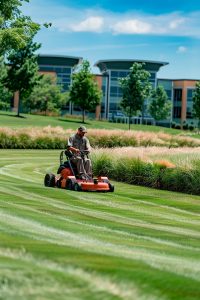
The first mow of the season should happen when the grass has begun actively growing and has reached approximately 3 to 4 inches in height. In WNY, this typically occurs in late April or early May depending on the weather. Set the mower height to 3 inches for the first cut, removing no more than one-third of the grass blade length. Cutting too short in early spring stresses the grass when it is trying to establish root growth and can open the door to weed invasion.
Thatch evaluation follows the first mow. Thatch is the layer of dead grass stems, roots, and debris that accumulates between the soil surface and the living grass blades. A thin layer of thatch, up to half an inch, is actually beneficial because it insulates roots and retains moisture. Thatch thicker than half an inch blocks water, air, and nutrients from reaching the soil and should be addressed through dethatching. Use a dethatching rake for small areas or a power dethatcher for larger lawns. WNY lawns are particularly prone to thatch buildup because the long growing seasons of cool-season grasses like Kentucky bluegrass and perennial ryegrass produce more organic material than can decompose naturally.
Core Aeration
Core aeration is one of the most beneficial spring lawn care tasks and one of the most frequently skipped by homeowners. Aeration involves pulling small plugs of soil from the lawn, which relieves soil compaction, improves air and water penetration to the root zone, and creates space for roots to expand. WNY soils, particularly the heavy clay soils common in Niagara and Erie counties, compact significantly under snow weight during winter. This compaction restricts root growth and water drainage, leading to thin, struggling turf. Core aeration in early to mid-spring, when the soil is moist but not saturated, provides immediate benefits that are visible within weeks as the grass responds to improved root zone conditions.
Soil Testing and Fertilization
Soil testing is an underutilized tool that takes the guesswork out of fertilization. A soil test from the Cornell Cooperative Extension or a private laboratory tells you the exact pH level, nutrient content, and organic matter percentage of your soil. WNY soils tend to be slightly acidic, and many lawns benefit from lime application to raise the pH to the 6.0 to 7.0 range that cool-season grasses prefer. Without a soil test, you are guessing at what your lawn needs, which leads to either under-fertilization or over-fertilization, both of which produce poor results.
The first fertilizer application should occur in mid to late May in WNY, after the grass has been mowing for several weeks and is actively growing. Applying fertilizer too early, before the grass is growing, wastes the nutrients and can promote weed growth rather than turf growth. Use a balanced slow-release fertilizer appropriate for cool-season grasses. The soil test results will indicate whether additional amendments like potassium or phosphorus are needed.
Weed Prevention and Overseeding
Weed prevention is most effective as a pre-emergent application timed to soil temperature rather than calendar date. Pre-emergent herbicides prevent crabgrass and other annual weed seeds from germinating, but they must be applied before the seeds sprout. The general guideline is to apply pre-emergent when soil temperatures reach 55 degrees Fahrenheit at a depth of 4 inches, which typically occurs in late April to early May in WNY. Monitor soil temperature rather than relying on calendar dates, because WNY spring arrival varies significantly from year to year.
Overseeding bare or thin areas should be done after dethatching and aeration but before pre-emergent application, because pre-emergent herbicides prevent all seed germination, including grass seed. If you need to both overseed and apply pre-emergent, prioritize the bare areas for overseeding and apply pre-emergent only to the areas with established turf. Alternatively, wait until fall for overseeding, which is actually the preferred seeding window for cool-season grasses in WNY because the warm soil, cooler air temperatures, and reduced weed competition of September and October create ideal germination conditions.
Cutting Edge Services, owned and operated by Steven DiBartolomeo, provides lawn maintenance, landscaping, hardscaping, and commercial snow management across Niagara and Erie counties. Steven brings over 10 years of hands-on industry experience, and Cutting Edge has built its reputation on owner involvement, responsive communication, and quality work backed by the flexibility of both individual services and 4-season maintenance contracts. The 4-season contract model is particularly well-suited to WNY homeowners because it provides continuous property maintenance from spring cleanup through fall leaf removal and winter snow plowing, with a single, consistent provider managing everything.
Cutting Edge Services serves homeowners in Lockport, Tonawanda, North Tonawanda, Amherst, Pendleton, Wheatfield, and surrounding communities.
Watering, Mowing Height, and Ongoing Maintenance
Watering strategy during spring is another consideration that WNY homeowners often get wrong. In most years, WNY spring provides adequate moisture from rainfall and snowmelt, and supplemental irrigation is not needed until June. Overwatering in spring is actually counterproductive because it keeps the soil saturated, promotes fungal growth, and discourages deep root development. Grass that is watered deeply but infrequently develops deeper roots than grass that receives frequent shallow watering. If supplemental irrigation is needed during a dry spring, water deeply once or twice per week rather than lightly every day.
Mowing Height and Clipping Management
Mowing height through the spring matters more than most homeowners realize. Maintain a mowing height of 3 to 3.5 inches through spring and into summer. Taller grass shades the soil, which reduces weed seed germination, retains moisture, and promotes deeper root growth. Cutting grass too short, a practice called scalping, exposes the soil surface to sunlight, which triggers crabgrass and other weed seeds to germinate, and stresses the turf during a period when it should be establishing its root system for the season.
Mow frequently enough that you are never removing more than one-third of the grass blade length in a single mowing. During the peak spring growth period in May and early June, this may mean mowing every 4 to 5 days rather than the weekly schedule that most homeowners follow. Mowing on a frequency-based schedule rather than a calendar-based schedule produces a healthier, denser lawn.
Leave grass clippings on the lawn rather than bagging them. Grass clippings decompose quickly and return nitrogen and moisture to the soil. Research from Cornell University and other land-grant institutions has consistently shown that grasscycling, the practice of leaving clippings in place, provides the equivalent of one full fertilizer application per year at no cost. The only time clippings should be removed is when they form heavy clumps that smother the underlying grass, which happens when mowing after rain or when the grass has grown too tall between mowings.
Edging and the Transition to Regular Maintenance
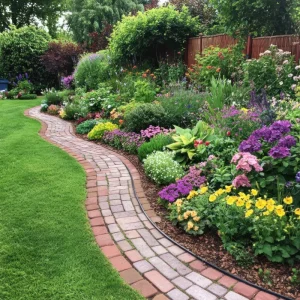
Edge maintenance along driveways, walkways, and garden beds gives a manicured appearance that elevates the overall look of the property. Clean, defined edges are one of the most visible differences between a professionally maintained lawn and a DIY-maintained lawn. String trimmer edging along hard surfaces and bed edging along garden borders should be part of every mowing visit during the growing season.
For homeowners who want the results of professional lawn care without the time commitment and equipment investment, Cutting Edge Services offers weekly mowing contracts that include mowing, trimming, edging, and blowing of clippings from hard surfaces. The 4-season maintenance contract extends this relationship through fall cleanup, leaf removal, and winter snow plowing, creating year-round property maintenance under a single provider.
The transition from spring preparation to regular season maintenance should feel seamless, and working with a single provider from the first spring cleanup through the last fall leaf removal creates that continuity. Steven personally oversees every property in the Cutting Edge portfolio, which means the owner knows your lawn’s specific conditions, challenges, and history rather than rotating different crew members through each visit. This owner-involvement model delivers consistent quality and accountability that larger lawn care companies struggle to match.
Contact Cutting Edge Services to schedule your spring lawn care or discuss a seasonal maintenance contract. Getting your lawn care sequence right in spring sets the foundation for a healthy, thick lawn that performs well through the heat of summer and enters fall dormancy in strong condition.
Frequently Asked Questions
Q: When should I start mowing my lawn in WNY?
A: The first mow in Western New York typically occurs in late April or early May when grass has reached 3 to 4 inches in height and is actively growing. Set the mower to 3 inches for the first cut. Mowing before the grass is actively growing can stress the turf and delay healthy spring recovery.
Q: What is snow mold and how do I treat it?
A: Snow mold is a fungal condition that appears as circular patches of matted, discolored grass where snow sat for extended periods during winter. Light cases resolve on their own as the lawn dries and warms. Raking the matted areas to improve air circulation accelerates recovery. Severe cases may require overseeding in the affected patches.
Q: When should I apply pre-emergent herbicide in WNY?
A: Apply pre-emergent herbicide when soil temperatures reach 55 degrees Fahrenheit at 4 inches deep, which typically occurs in late April to early May in WNY. Monitor soil temperature rather than relying on calendar dates, as WNY spring timing varies year to year. Pre-emergent must be applied before crabgrass seeds germinate to be effective.
Q: Should I aerate my lawn in spring or fall?
A: Both spring and fall aeration are beneficial for WNY lawns. Spring aeration relieves compaction from winter snow weight and improves root zone conditions for the growing season. Fall aeration combined with overseeding takes advantage of ideal germination conditions. For heavily compacted WNY clay soils, aerating twice per year provides the best results.
Q: How do I fix salt damage on my lawn?
A: Salt-damaged areas along driveways and walkways typically appear as brown, dead strips. Flush these areas with water during spring rains to leach salt from the soil. Once soil temperatures warm, apply gypsum to help neutralize the salt, add topsoil to damaged areas, and overseed with a salt-tolerant grass variety. Most salt-damaged areas recover well with proper treatment.
Q: When should I fertilize my lawn in WNY?
A: The first fertilizer application in WNY should occur in mid to late May, after the grass has been actively growing for several weeks. Applying fertilizer too early promotes weed growth rather than turf growth. Use a balanced slow-release fertilizer for cool-season grasses. A soil test from Cornell Cooperative Extension provides specific nutrient recommendations for your property.